

A key challenge for Viet Nam in reaching high-income status will be developing enough skilled workers. Returns to higher education have been declining in the country, raising questions about the economic incentives for younger Vietnamese to pursue tertiary education. A major factor in this decline has been the lack of high-skilled jobs to meet the demand from the recent expansion in university education.
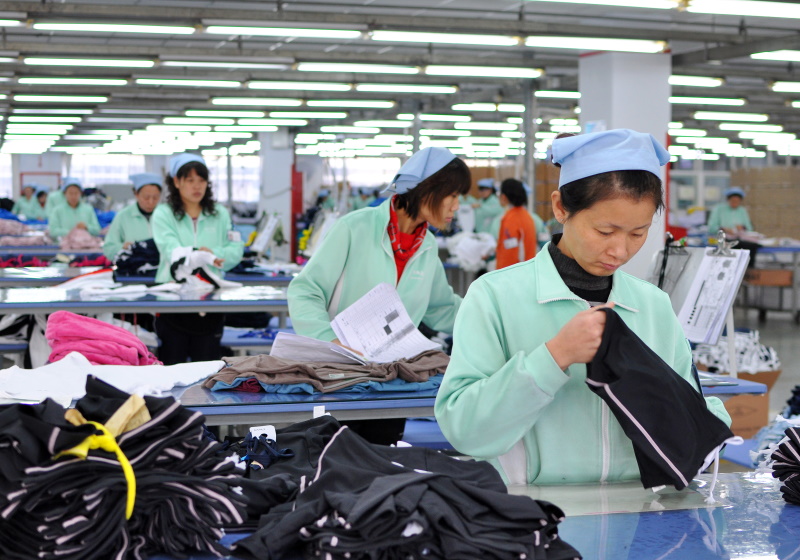
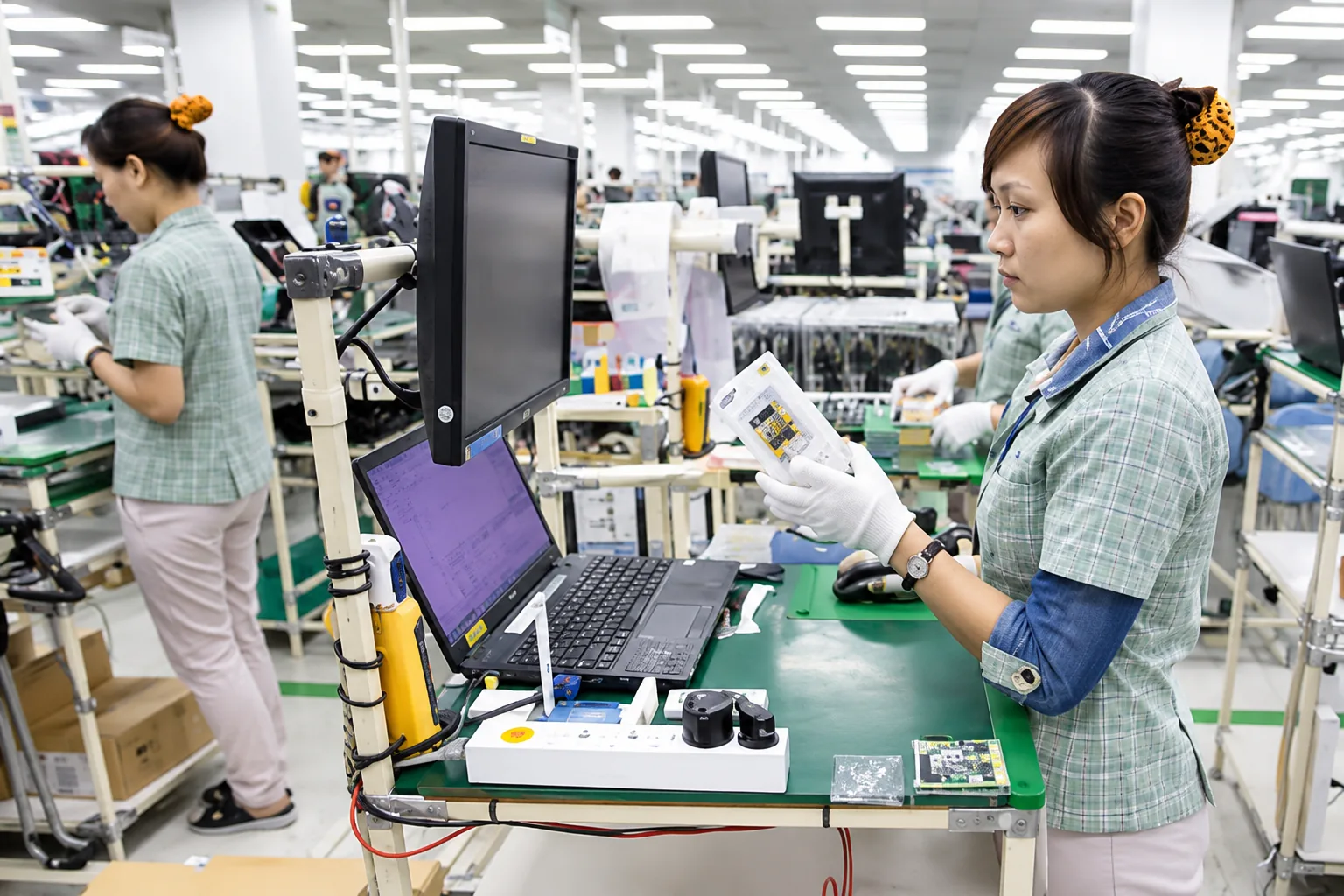
With around 46 percent of formal female workers based in industrial parks (IPs), the In Her Shoes Survey helps trace the potential pathways into higher-skilled jobs, whether by remaining in IPs in better jobs or using the IPs as stepping stones to new careers. The data collected also illustrates the limitations of IPs to provide such opportunities and what might be needed to change this.
Furthermore, as Viet Nam moves up the GVC value chain, some jobs in IPs will require increasingly higher skill levels, which will mean greater incentives for younger women to obtain higher education (whereas they can currently earn a good wage in IPs without it).
The In Her Shoes Survey data will help us understand how to keep women from dropping out of this sector in early middle age and keep more women in high-skilled employment, helping continue the role industries in IP areas have played as an engine for upward economic mobility for women.
Additionally, national labor force data shows that women working in medium- and large-sized firms in the manufacturing sector (50+ employees) leave these firms earlier than women working in other sectors. In this regard, the new survey data will also help identify the constraints and needs of women working in IP areas to benefit from new lifelong learning legislation.
To answer these questions, the In Her Shoes Survey interviewed women and men working in IPs in four Vietnamese cities: Da Nang, Thai Nguyen, Can Tho, and Ho Chi Minh City.
Parstats was responsible for the sampling design and sample management to collect data from women and men working in IPs by city, sector, employer’s country of ownership, and two age groups. The sample had a two‑stage stratified probability design and included 1,400 women and 600 men working in IPs.
For women, the domains of interest were defined as:
- Province: Ho Chi Minh City, Thai Nguyen, and Can Tho;
- Economic sector: Semiconductor industries vs. Other manufacturing;
- Country of ownership of the employer firm: Vietnam, other Asian countries, G8 and Oceania;
- Age: 15–29, 30 years and above.
These domains were not mutually exclusive, which complicated the allocation of sample sizes across domains and their intersections.
The sample allocation was conducted through precision calculations targeting a set of desired coefficients of variation and standard errors, supported by data from the 2023 Enterprise Census, and allocation into cross-classified cells was done using linear programming.
Furthermore, since a key objective of the study was to compare women aged 15–29 with those aged 30 and older, the allocation between these two groups was equal to maximize statistical power.
The 2023 Enterprise Census was not suitable as a frame for the first sampling stage since its smallest geographic units were too large. Therefore, the sampling design used Enumeration Areas (EAs) from the 2019 Population Census as Primary Sampling Units (PSUs), which were the smallest geographic units available with employment information.
Industrial parks were mapped in each province, and EAs were grouped into zones based on their distance from the nearest industrial park:
- Zone 1: EAs within industrial park communes;
- Zone 2: EAs in communes neighboring Zone 1;
- Zone 3: EAs neighboring Zone 2;
- Additional zones up to Zone 5, where applicable.
Five zones were established in Ho Chi Minh and Thai Nguyen, and three zones in Can Tho. 13 EA strata were then formed by combining province and zone, and the sample of EAs was allocated across these strata proportionally to the number of manufacturing female workers from the 2019 Population Census.
Stratifying EAs into the above zones enabled fieldwork to focus on areas closest to industrial parks, where the survey target population is most prevalent, while still including more distant areas; thus improving operational efficiency while preserving full sample coverage and representativeness.
For the second sampling stage, local authorities provided lists of all IP manufacturing workers in each selected EA. The field team then screened all listed workers to collect individual-level information, including age (for female workers only), economic sector, and the country of ownership of the employer firm. Strata of workers were then formed within each EA based on these variables.
Next, the overall sample was allocated across these worker strata within the EAs via linear programming, subject to the following constraints: ensuring that the sample size targets for all domains were met, achieving the overall target sample size, and assigning an adequate number of workers to each EA for operational feasibility.
Finally, workers were selected in each stratum within the EAs using simple random sampling.
The construction of survey weights followed four steps: calculation of base weights, nonresponse adjustment, calibration, and weight trimming and recalibration.